

What Is Ayurveda, and What Do You Actually Do With It?

Most people meet Ayurveda through a massage table or a dosha quiz, and they never see the whole system either one actually belongs to.
Ayurveda, a traditional system of medicine from the Indian subcontinent with a long documented textual history, is not a mood, a diet, or a quiz result. It has a shape, and the shape is teachable in one sitting. That is what this post is for, and it is written for the reader who has already had a treatment or already taken a quiz and still could not explain the system underneath either one to a friend.
The short version
Ayurveda is a traditional system with a real structure, not a wellness aesthetic.
Everything in the body and the world is described through five elements, condensed into three functional principles called doshas.
Agni, the digestive fire, is the pivot the whole system turns on.
Practice splits into two halves: what you do yourself, and what happens with a practitioner.
A dosha is not a personality type, and Ayurveda is not a replacement for the medical care you already have.
Five elements, condensed into three working principles
Classical Ayurvedic thought describes the physical world through five elements: earth, water, fire, air, and space. On their own, five elements are just a list. The useful move Ayurveda makes is condensing those five into three functional principles called doshas, which describe how a particular body runs rather than what kind of body it is.
Those same five elements are not only a body map. Ayurveda reads food, weather, and the stretch of the year through them as well, which is part of why a thorough practitioner asks about your life outside the treatment room and not only about whatever symptom brought you in.
Vata, built from air and space, governs movement, breath, and the nervous impulses that carry a thought from one place to another. Pitta, built from fire and water, governs transformation, the literal processing of one substance into another, digestion included. Kapha, built from earth and water, governs structure and lubrication, the mass and fluid that hold a body together and keep its parts from grinding on each other. Everyone carries all three, in a personal ratio a full guide can walk through in far more depth than one paragraph should attempt. Our beginner's guide to vata, pitta and kapha is where that belongs.
It is not your personality, and it is not what a quiz result hands you in exchange for an email address.
A dosha is a working principle, not a label.
Agni, the fire the whole system turns on
If doshas describe how a body is built to run, agni describes whether it is actually running well. Agni is the digestive fire, and Ayurveda positions it as the engine underneath nearly everything else the system talks about, not only what happens after a meal. Strong, steady agni is what lets a body actually use what it takes in, food, information, even experience. A practitioner asking about agni is rarely asking whether you feel hungry. They are asking whether what you eat, feel, and take in actually gets used, or whether it just sits there. When that fire runs weak, Ayurveda holds that undigested residue can build up into something the tradition calls ama, a topic dense enough to earn its own explanation elsewhere on this site.
The two halves of practice
This is the part almost nobody explains, and it is the reason a single massage can leave someone with a completely lopsided picture of the whole system.
Half one is what you do yourself, daily and across the seasons. Ayurveda calls the daily version dinacharya, simply the daily routine, and its seasonal counterpart ritucharya, the routine that shifts with the year. Waking around the same time, tongue scraping, self massage with warm oil, a quiet stretch of the morning before a phone screen enters the picture, eating the main meal when digestion runs strongest: none of it requires a practitioner, an appointment, or a product. It is also the half that actually fills most of a calendar year, long after any single appointment ends. We cover one version of it in the Ayurvedic morning routine, and it is a reasonable place to start if this whole idea is new.
Half two is what happens with a practitioner, and it runs in a fixed order: assessment first, therapy second. Assessment is conversational and observational, questions about digestion, sleep, and stress, alongside the tongue and pulse reading a practitioner is trained to do in person. What to expect on that first visit is laid out in full in what to expect at your first Ayurvedic consultation. Only after assessment does a specific therapy get chosen, whether that is something as accessible as abhyanga, a warm oil massage, or a deeper reset that falls under panchakarma, a whole category of supervised cleansing therapies with its own long explanation elsewhere on this site. If you already know you want hands on work but not which kind, which Ayurvedic therapy to book first sorts that out by dosha and by goal.
Honestly, this two half structure is the single idea I wish every new visitor understood before booking anything, because almost every other question people ask us actually traces back to not knowing it exists.
People walk out of one appointment assuming the whole system is a spa modality, when the daily half is the one a person actually lives in for the other three hundred and sixty some days of the year.
Most Americans who have encountered Ayurveda at all have only met half two, usually through a massage.

What Ayurveda is not
A cautious new reader is usually asking one real question underneath all the others: is this instead of my actual medical care, or alongside it. The honest answer is alongside. Ayurveda is not a replacement for the medical care someone already has, and an assessment with a practitioner is not a diagnosis in the sense a physician's is. Practitioners here work alongside the care a client already has, not in place of it, and a straightforward practitioner will say so plainly when something in a conversation belongs with your own doctor instead.
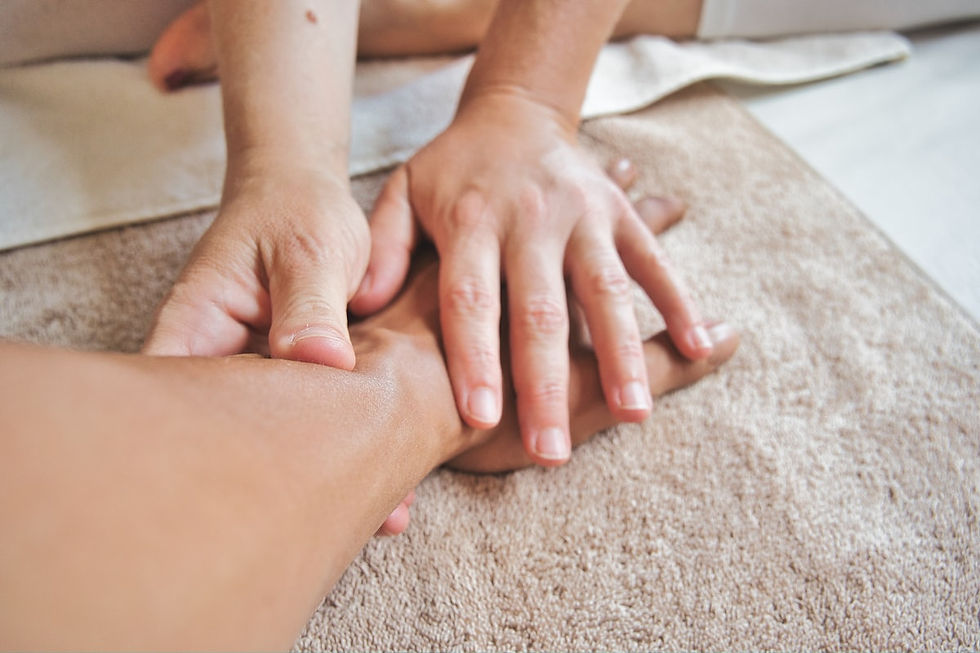
That in person piece is not incidental. Pulse and tongue reading are physical work a practitioner does with their own hands and eyes, which is a real part of why an assessment is built around actually being in the room together rather than described secondhand.
A dosha is also not a personality type, not a horoscope sign, and not a fixed identity someone gets handed once and carries forever. It is a description of tendency, meant to inform a conversation with a practitioner, not to sort a person into a permanent bucket after a two minute online quiz. Read any quiz result as a rough starting question, not a verdict.
That is the front door. Five elements condense into three functional principles. Agni is the fire the system turns on. Practice splits into daily self care and hands on therapy with a practitioner, in that order. Everything else on this site, every single therapy explained one at a time, is a room off this same hallway.


Comments