

What to Expect at Your First Ayurvedic Consultation

Updated: Aug 22
Most people spend longer choosing a restaurant for dinner than they spend preparing for an appointment that ends up shaping months of their care.
That is not a criticism. A first Ayurvedic consultation does not look like an ordinary doctor's visit, so there is nothing obvious to prepare. No form asks for your dosha. No pamphlet explains what a pulse assessment actually involves. You show up, and the hour that follows is honestly one of the more useful hours many people spend on their health without knowing how to get ready for it.
The short version
Here is the condensed version if you only have a minute before your appointment.
A first consultation runs about 60 to 90 minutes and includes a full health history, not just a symptom list.
A practitioner reads your pulse and tongue as part of determining your dosha, the constitution that shapes an Ayurvedic plan.
You leave with a written plan, not a diagnosis. Diet, daily routine, herbs, and possible therapies like abhyanga or shirodhara may all be part of it.
An initial consultation at Ayurway costs $130.
Nothing is required beforehand except a rough sense of your health history and current concerns.
Before You Sit Down: What a First Ayurvedic Consultation Actually Means
Ayurveda, the traditional medical system that developed in India over thousands of years, approaches a first visit less like triage and more like an interview. Instead of starting from a list of symptoms, a practitioner is trying to understand how your whole system runs: your digestion, your sleep, your energy through the day, your stress response. A Western intake form asks what is wrong. An Ayurvedic consultation asks how you actually work, and what is wrong tends to fall out of that picture on its own.
This is also why a first visit takes longer than most people expect. There is no shortcut version of understanding a person's constitution.
The Session Itself
1. A Conversation Before Any Assessment
Expect to talk more than you expected. A practitioner will ask about sleep patterns, appetite, digestion, energy at different points in the day, stress, past injuries, and for women often menstrual history. None of it is small talk. Every answer is data that eventually feeds into naming your dosha and shaping a plan around it.
2. Pulse and Tongue Assessment
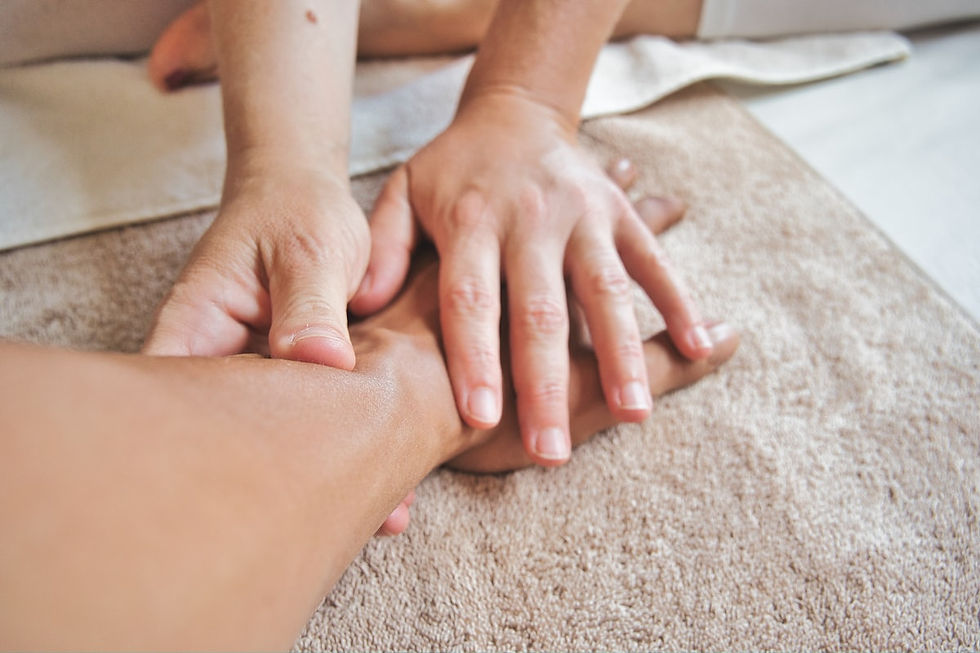
A practitioner takes your pulse for a full minute or longer far past what a nurse checking your heart rate would do. This is nadi pariksha, pulse reading, one of the classical assessment tools in Ayurveda. Your tongue gets a similarly close look afterward, since its color, coating, and texture are read as signs of how digestion is currently running.
This is reading rhythm, strength, and quality, not counting beats per minute.

3. Naming Your Dosha
Everything from the history to the pulse feeds into naming your dosha or doshas. Vata, Pitta, and Kapha are the three doshas, the functional energies Ayurveda uses to describe how a body tends to move, digest, and respond to stress.
Most people are a blend of two, with one usually dominant.
Here the goal is narrower than a full personality profile. A practitioner wants to know which dosha is currently out of balance, since that is what a plan actually gets built around, not just your general type.
4. A Plan, Not a Prescription
You will not leave holding a diagnosis. What you get instead is usually a short list: adjustments to daily routine, food guidance suited to your dosha, maybe an herb like ashwagandha, which in Ayurveda is traditionally used for steadying stress and easing sleep, or triphala, a three fruit blend traditionally used for digestion. Abhyanga, warm oil massage, comes up often as a starting therapy because it suits nearly every constitution. Shirodhara, a steady stream of warm oil poured across the forehead, gets recommended more often for stress and sleep concerns. For anyone dealing with something more entrenched, panchakarma, a longer multi day cleansing program, might be raised as a future option rather than a same day recommendation.
None of this gets locked in on the spot. The plan is meant to flex as your practitioner sees how your body responds over the following weeks.
A first consultation is a starting conversation, not a finished verdict.
What to Bring and What Not to Worry About
Bring whatever health history you can gather, even loosely. Past diagnoses, medications, supplements, recent bloodwork if you have it. None of it needs to be organized into a binder. A rough timeline in your head of when a concern started and what makes it better or worse is usually more useful than a printout.
You do not need to fast, avoid coffee, or dress a certain way. Some visits ask for that kind of preparation before bloodwork. An Ayurvedic consultation is not that. Come as you normally are on an average day, since that is actually the version of you the practitioner needs to see.
Honestly, the pulse and tongue part is the piece most first time visitors are quietly nervous about, and it is also the part that takes the least effort from you.
You sit there. That is the whole job.
A Few Questions People Ask Before Booking
Do I need to already know my dosha
No. Most people arrive with no idea, and that is expected. Guessing from an online quiz beforehand does not save time and sometimes sends the conversation in the wrong direction, since a quiz reads the answers you chose about yourself and a pulse assessment reads what your body is actually doing right now. Those two are not always the same thing.
Can I still come if I am already under a doctor's care
Yes, and it often works better that way. Ayurveda is not asking you to choose one system over the other. Practitioners here are used to working alongside an existing care team, and mentioning your medications and diagnoses during the history section is exactly the kind of detail that makes the plan safer and more useful.
What if nothing feels wrong and I am just curious
That is a completely normal reason to book. A good share of the people we see are not chasing a specific complaint. They want a clearer sense of their own constitution and some daily habits that actually fit how their body runs, rather than generic advice built for somebody else's dosha entirely.
What a First Consultation Is Not
This is not a lab heavy diagnostic workup, and a practitioner here will say so directly if something you describe sounds like it needs a physician's evaluation first. Ayurveda is a system for understanding how your body runs day to day, not a replacement for emergency care or an existing medical relationship you already trust. The two work well alongside each other. They are not competing for the same job.
After You Leave: What Comes Next
A consultation at Ayurway costs $130, and that fee covers the full history, the pulse and tongue assessment, and the written plan you leave with. Most people book a return visit four to six weeks out, enough time to notice whether the routine changes and any herbs are actually doing something. Therapies like abhyanga or shirodhara can often be scheduled the same day if your practitioner recommends starting right away, though there is no pressure to add anything beyond the consultation itself.
The best first consultations do not feel like a pitch for services you did not ask for. They feel like someone finally asked the right questions about your health, in the right order, for once. That is really all a first visit is trying to do.


Comments