

Which Oil Is Actually on the Table

Almost everyone who books an abhyanga session asks about the massage itself. Almost no one asks about the oil, and the oil shapes the session just as much as the strokes do.
Ask a practitioner what actually changes from one session to the next and the honest answer is usually the oil, not just the technique. Abhyanga, the traditional full body warm oil massage at the center of Ayurvedic bodywork, follows a consistent sequence of strokes, and the oil warmed for it is chosen fresh for the season and the person. What shifts is which taila, the general term Ayurveda uses for a prepared massage oil, ends up on the table.
The short version
The short version, if you just want to know what actually goes into the bottle.
Sesame oil is the classical base oil in Ayurveda, heavy and warming, and the one most practitioners reach for first.
Coconut oil is light and traditionally described as cooling, which is why it belongs to the hottest part of the year rather than to the whole calendar.
Herbal oils are a base oil plus a decoction cooked into it, and they are named for what was cooked in, not for the base underneath.
Which oil fits best shifts with the season and with a person's dosha, the constitutional pattern Ayurveda uses to describe someone's baseline tendencies.
A cold oil straight from a cupboard behaves nothing like a warmed one, and warming it is not optional.
Why the oil is a decision, not a default
An abhyanga session begins with a choice most guests never actually see made: which oil is warmed before a single stroke happens. It is easy to assume oil is oil, mostly there to reduce friction between hand and skin. That assumption misses most of the point. In Ayurveda, the specific oil applied to the body is regarded as an active part of the therapy in its own right, chosen for its own qualities rather than picked for convenience.
Three broad categories cover almost everything that ends up on a table: sesame oil, coconut oil, and herbal oils built on one of those two bases. Each is understood differently, used at a different point in the year, and considered a better or worse fit for different constitutions.
Sesame oil: the classical base
Sesame oil is the default base named across most classical Ayurvedic texts. It is heavy, slow to absorb compared with lighter oils, and traditionally described as warming.
That combination makes it the oil most practitioners reach for first, since a heavy warming oil is considered a direct counterbalance to vata, the dosha associated with cold, dry, light, and erratic qualities.
Vata governs movement, and when it runs unchecked it tends to show up as cold hands, restless sleep, or a mind that will not slow down. A warm, heavy sesame oil worked slowly into the skin is one of the oldest tools Ayurveda has for settling that pattern, which is a large part of why sesame shows up more often than any other single base, in every season but the hottest one.
Coconut oil: the cooling counterpart
Coconut oil sits at the other end of the same spectrum, light where sesame is heavy.
Where sesame is considered warming, coconut is traditionally described as cooling, which is why it tends to show up in high summer and for pitta, the dosha linked to heat, sharpness, and a short fuse under stress, rather than across the whole calendar.
That seasonal logic is the whole reason a practitioner asks how you have been feeling before reaching for a bottle. A person running hot in August and a person running cold in January are not well served by the same oil, even if both of them are booking the exact same therapy.
Herbal oils: a base plus what was cooked into it
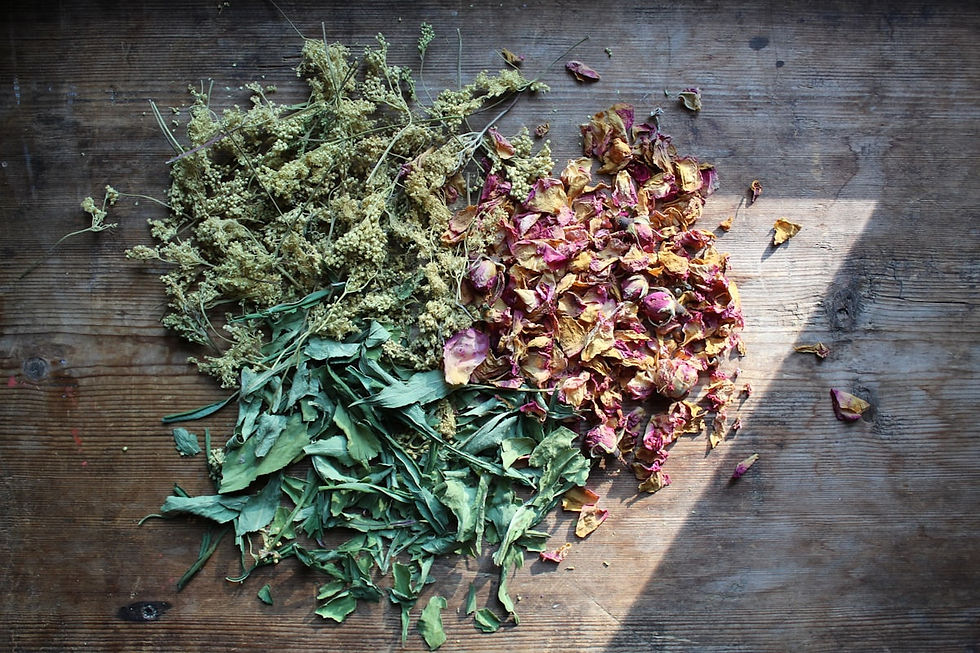
Herbal oils, sometimes called medicated tailas, start from a sesame or coconut base and add a decoction, an infusion of herbs simmered into the oil slowly enough that the water cooks off and the herb's qualities transfer into the fat. Mahanarayan taila is one of the more recognizable names in this category, and it is named for what was simmered into it rather than for the base oil underneath.
The naming logic is the useful part to take away. A herbal oil's name tells you what was cooked in, never the base, which is why two herbal oils can share almost nothing in common except the word taila attached to the label.
Choosing an oil for home self massage
The same logic carries over from the practitioner's table to your own evening routine, standing in front of your own cupboard deciding what to warm up before bed.
1. Match the oil to the season, not just the label
A bottle of sesame oil does not stop being warming in July, and a bottle of coconut oil does not stop being cooling in January. Honestly, if I had to point someone toward one place to start at home, it would be warmed sesame in the cooler months, since it is the closest thing Ayurveda has to a default and it is hard to get badly wrong. Coconut earns its place in the hot months, especially for anyone who runs warm to begin with.
2. Notice how you actually feel, not only your dosha on paper
A dosha assessment describes a tendency, not a fixed rule for every day of the year. Someone who is mostly vata can still run hot for a stretch, and the oil that fits that week is not automatically the oil their constitution suggests on paper. Pay attention to what your body is doing this week and let that override the general pattern when the two disagree.
3. Warm it before it touches skin
The single most common mistake in home self massage is applying oil straight from a cold cupboard or a refrigerator shelf.
A cold oil sits on top of skin instead of moving into it, which defeats a large part of what the practice is for.
Warming does not need equipment. Set a small glass container of oil into a bowl of hot water for a few minutes before you sit down, and skip the microwave, since heating oil in plastic is not something you want to do daily even when it seems faster.
4. Use more than feels efficient
People consistently under oil themselves the first few times they try this at home, applying a thin, quick layer the way they would apply lotion. Ayurvedic self massage calls for a generous, unhurried coating worked in with real time on each limb, not a fast pass meant to get the job done in ninety seconds.
Where this fits with the rest of the practice
None of this replaces a practitioner's judgment, and it is not meant to. If you want the fuller picture of what a session actually involves from arrival to the end, we have written about what abhyanga actually is in more depth elsewhere. The feet get their own separate oil logic entirely, which is covered in our piece on padabhyanga, the foot specific version of the practice. And once a session or a home self massage session is finished, what you do in the next few hours matters almost as much as which oil you chose, which is the subject of our abhyanga aftercare guide.
The oil was never the incidental part. It is chosen with the same care as the strokes that carry it.


Comments