

Ojas: The Ayurvedic Idea of Reserve, and Why Late Summer Drains It

By the third week of August, plenty of people who are not sick, not overworked, and not going through anything unusual still tell us they feel like they are running on fumes.
Nothing on their calendar or their bloodwork explains it particularly well. In Ayurveda, the traditional medical system of the Indian subcontinent our practice is built on, there is an old word for the resource that runs thin in exactly that situation: ojas, the body's reserve, the finished, settled product of everything digestion manages to build out of food, rest, and routine over time. It is not a diagnosis, and it is not a switch that is either on or off. It behaves more like a bank balance, and late summer here is one of the fastest ways of the whole year to spend it down.
The short version
The short version, if the rest can wait until later:
Ojas is the Ayurvedic idea of finished reserve, the steady vitality left over once digestion, rest, and routine have all done their work. Think what is left in the tank, not something you can buy in a bottle.
It is not something a person either has or lacks. It runs higher some weeks and lower others, closer to a bank balance than a fixed trait.
Late summer heat, a packed social calendar, travel, and the early stirrings of ritu sandhi, the shift into the next season, all draw on it at the same time.
Rebuilding it looks almost boring on purpose: earlier nights, warmer food, a slower evening, and a little less stimulation than August usually hands you.
None of this is about pushing through anything. It is about noticing the gauge before it reads empty.
What Ojas Actually Is, and What It Is Not
Ayurveda describes the body as building itself in stages. Food becomes plasma, plasma becomes blood, blood becomes muscle, and the chain continues through several recognized tissue layers until it arrives at the final, subtlest product of the whole process. That last, most refined product is ojas. It is described less as a substance you could point to and more as a quality: the steadiness in someone's eyes, the evenness in their voice under pressure, the sense that a person has something left in reserve rather than running right at the edge of what they have.
We are careful with the word on purpose. Plenty of wellness content reaches for the nearest familiar sounding English word when it hits ojas, and ends up describing something closer to a supplement claim than an Ayurvedic idea. That is not what is being described here. We stick with the clumsier, more accurate words, reserve and vitality, on purpose, even though they take longer to explain.
1. It is finished, not raw
Ojas is not simply energy or calories. It is what is left after digestion, sleep, and routine have already done their processing, the way a full pantry does not automatically mean a finished meal. A person can eat reasonably well and still run low on ojas if the rest of the process, sleep, rhythm, real quiet, never gets to complete.
2. It shows up in specific, ordinary things
Traditional texts associate strong ojas with steady sleep, a settled mind, resilient skin and hair, and the kind of evenness that lets someone absorb a hard week without being knocked sideways by it. Low ojas tends to show up just as plainly: thinner sleep, a shorter temper, a sense of being easily rattled by things that would not normally register.
3. It moves, it does not sit still
Nobody is simply an ojas person or not one. It rises with rest and good routine, and it falls with heat, travel, overstimulation, and irregular hours, which is exactly why a single season can drain it faster than a person's actual habits would predict.
Ojas is a level, not a label.
Why Late August Empties the Reserve Faster Than It Looks
Pitta, the hot, sharp, and transformative quality Ayurveda associates with digestion, metabolism, and body heat, has been building since early summer, and pitta season, the stretch of the year when it peaks, has already been asking a lot of everyone for weeks. Heat alone is traditionally understood to thin ojas out, and this particular August has delivered plenty of it.
Underneath that heat, something else is already stirring. Vata, the dry, light, and quick moving quality Ayurveda associates with movement, breath, and the nervous system, starts stirring early in dry inland valleys like this one, well before the calendar admits the season has turned. That overlap, pitta still present while vata is already arriving, is what Ayurveda calls ritu sandhi, the junction between two seasons. Both qualities pull on reserve in different ways, and for a few weeks they are both pulling at once.
1. Heat and dryness spend the reserve directly
Sustained heat is traditionally understood to thin ojas out much the way it thins out water, and the dry wind that arrives with ritu sandhi compounds it rather than offering any relief. Dry skin, restlessness, and a general sense of being a little more brittle than usual are the visible edge of that.
2. Travel unsettles the routine ojas depends on
Reserve is built by rhythm as much as by any single ingredient. Ayurveda counts a steady routine, regular meals, a consistent bedtime, familiar surroundings, as one of the main ways ojas gets replenished in the first place. Travel interrupts nearly all of it at once, even the fun kind, and late summer is when most people travel the most.
3. A full social calendar adds stimulation without adding rest
Weddings, going away parties, one more long dinner before everyone's schedule changes again. None of it is a problem on its own. Stacked together over a few weeks, with later nights and richer food than usual, it is a lot of sensory and social input landing on a system that is already managing heat and a seasonal shift underneath it.
None of this means anything has gone wrong.
Three separate, ordinary things are drawing on the same reserve during the same few weeks, and the body notices the arithmetic even when the calendar does not.
What Rebuilding Reserve Actually Looks Like
The honest answer is that it looks almost embarrassingly plain. Ayurveda's whole approach to rebuilding ojas sits under rasayana, the branch of the tradition concerned with rejuvenation, and rasayana leans on food, rest, and routine far more than it leans on any single remedy.
Food matters, and it does not need to be complicated. Dates, soaked almonds, warm milk, and ghee show up again and again in traditional descriptions of foods that nourish ojas, mostly because they are dense, warming, and easy on agni, the digestive fire, when it is already working overtime through a hot, irregular month. A bowl of dates after a long day does more for reserve than most people expect from something that plain.

Sleep timing matters more than sleep quantity alone. An earlier bedtime, even by thirty minutes, is traditionally considered one of the more direct ways to let ojas rebuild overnight, because so much of that rebuilding is understood to happen during deep, early night sleep specifically rather than sleep in general.
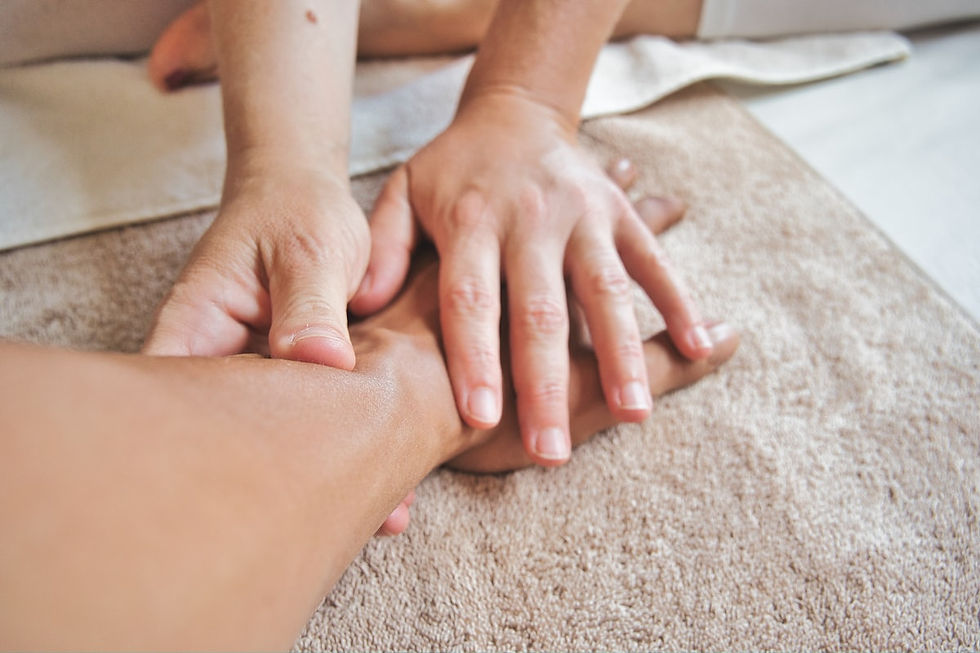
Touch has a real place in this too. Abhyanga, warm oil self massage done at home, is one of the routine tools Ayurveda points to for steadying a system that heat and travel have unsettled. For anyone who would rather receive it than do it themselves, we have written before about why massage belongs in the category of medicine rather than indulgence.
Reserve is exactly the kind of thing that argument is about.
Bodywork is not a reward for making it through a hard season. It is one of the actual mechanisms for refilling what the season spent.
Stimulation itself is worth rationing on purpose. Fewer evening plans some weeks, a little more quiet in the hour before bed, one dinner declined so the next one has more left to give. None of that is dramatic, and that is rather the point.
Where We Land On This
Honestly, reserve is a slippery thing to talk about in a wellness setting, because it resists the kind of clean before and after story that sells easily. Nobody arrives thin on a Monday and leaves full by Friday.
It is slower and less linear than that, closer to paying down a balance a little at a time than to flipping a switch.
We would rather describe it accurately than make it sound tidier than it is. If the last few weeks of heat, travel, and a full calendar have left you feeling thinner than usual, that is not a sign that something is wrong with you. It is closer to pitta season doing exactly what it tends to do at its edges, spending more than it lets you notice spending, right as the first signs of the shift into vata season start asking for something different.
A consultation here runs $130, and it is a reasonable place to actually ask where your reserve stands this month, rather than guessing from a blog post written for everyone at once. Most weeks, though, the smaller stuff, an earlier bedtime, a bowl of dates instead of another iced coffee, one declined invitation, does more than people expect.


Comments